Kai Havertz Matches Lionel Messi’s Champions League Final Goals Record with Arsenal winner
Kai Havertz’s early goal for Arsenal against Paris Saint-Germain in the 2026 Champions League final drew him level with Lionel Messi on two goals scored in finals, leaving Cristiano Ronaldo ahead on four.
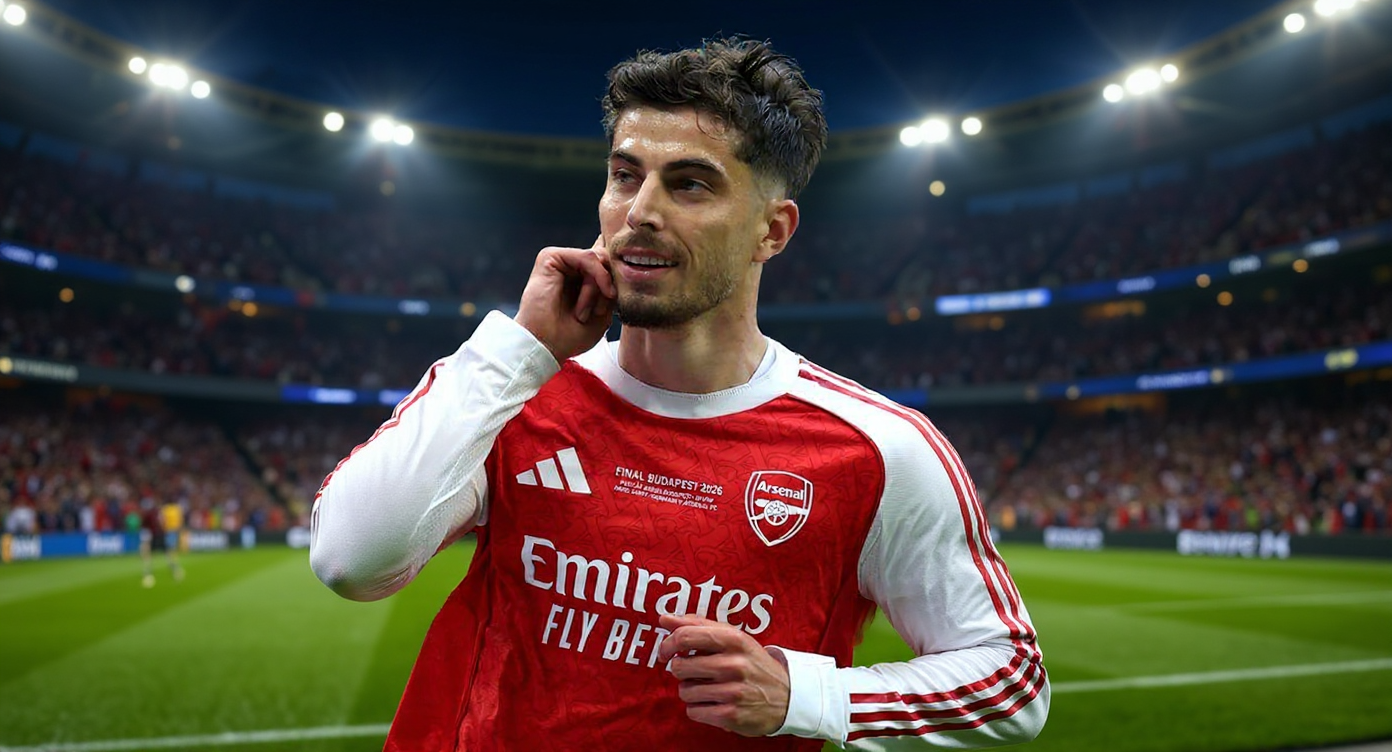
Kai Havertz scored in the opening minutes of Arsenal’s Champions League final against Paris Saint-Germain, and that strike moved him level with Lionel Messi on two goals scored in UEFA Champions League finals. The latest update — from World Soccer Talk — highlights how Havertz’s goal for Arsenal matches Messi’s tally in finals, while Cristiano Ronaldo remains the leading finals goalscorer.
Why it matters
Goals in finals are rare and defining moments. Havertz’s early finish not only gave Arsenal a vital start in the match against PSG but also put the German forward into a short list of players who have scored multiple goals in Champions League finals — a statistic often used to measure big-game impact and legacy.
How Havertz joined Messi on the finals goals list
According to World Soccer Talk, Havertz’s goal in the Champions League final was his second in a final. His first came for Chelsea in the 2021 final, when he scored the only goal to defeat Manchester City. Lionel Messi has also scored twice across Champions League finals, both for Barcelona: a headed goal in the 2009 final versus Manchester United and a goal at Wembley in the 2011 final, again against Manchester United. The report notes Messi featured in three finals during Barcelona’s successful era, with additional title wins in years when he did not play in the final match.
Where Cristiano Ronaldo stands
World Soccer Talk’s piece points out that Cristiano Ronaldo remains ahead of both Havertz and Messi on Champions League final goals, having scored four goals across six finals played for Manchester United and Real Madrid. The source lists Ronaldo’s finals goalscoring chronology including 2008 (United), a 2014 penalty for Real Madrid, and a 2017 brace against Juventus, with his last final appearance in 2018 not producing a goal.
- Kai Havertz scored in the opening minutes of the Champions League final for Arsenal against Paris Saint-Germain (source: World Soccer Talk).
- That goal is Havertz’s second in a Champions League final; his first was the winner for Chelsea in 2021 versus Manchester City.
- Lionel Messi has also scored two goals in Champions League finals (2009 and 2011), both for Barcelona.
- Cristiano Ronaldo has four goals in Champions League finals and remains the leading goalscorer in finals.
- Alfredo Di Stefano and Ferenc Puskas hold the record for most goals in Champions League/European Cup finals with seven each (noted in the source).
Context and competition relevance
The milestone places Havertz among a select group of players whose goals have directly shaped the outcome of Europe’s biggest club matches. World Soccer Talk’s summary also references historical all-time finals scorers — noting Alfredo Di Stefano and Ferenc Puskas sit atop the list with seven goals each — offering context on how rare multi-goal final records are across eras.
This item is drawn from a single report and focuses on Champions League finals goalscoring records rather than a full match report. The source confirms Havertz’s goal and the comparative statistics for Messi and Ronaldo but does not provide the final scoreline, full match timeline, or other match events.
What it means / What happens next
Havertz’s goal cements his reputation for decisive contributions in major finals, giving Arsenal an early advantage in the match against PSG. The immediate next facts to verify for a full match story are the final result, minute-by-minute events, and any post-match remarks from players or managers — details not provided in the source. Depending on the final outcome, this milestone could be used to evaluate Havertz’s impact in the season and his legacy in Champions League history.